Highlights from Health.tech Global Summit 2026
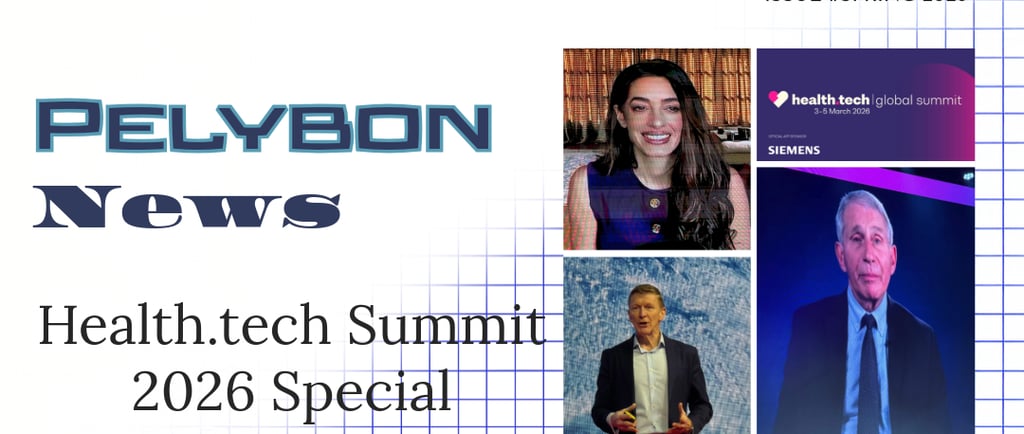
To celebrate the excellent and highly successful health.tech | global summit in Basel last week, a ‘Spring Special’ edition of Pelybon News, with highlights from the keynote speeches (Tim Peake, Dr Anthony Fauci and Amal Clooney) plus my thoughts to some of the advancements in technology that were presented. And being a Pelybon News, the slight science fiction twist, that was actually quite pertinent to the event….
Noel Butterworth
3/10/202612 min read

It’s no longer science fiction.
There was a “wine fountain” as part of the health.tech | global summit 2026 in Basel, with free-flowing white wine that the event’s chatbot hosts guided us to drink in moderation.
I jokingly commented that if I took a sip of wine for every mention of AI during the event… I’d be dead with alcohol poisoning.
Less frequently referenced, though not without some level of recurrence, were phrases such as “it’s no longer science fiction” etc. Including one moderator berating his panel guests after asking them to hypothesise the future of their health technology, in a “science fiction way” only for their visions to be highly likely developed and implemented within two years. (It’s possible that some of us that have been on this planet significantly longer than others may have a better understanding of the social significance of what ‘science fiction’ truly means.)
As regular readers* of Pelybon News will know, part of the purpose of this newsletter is to support the Medical Device community whilst also looking at technological developments from the point of view of a science fiction fan. This special issue will be combining both.
*ha! If there’s such a thing! ...but thanks if you are!
As to this being a ‘special issue’— I remember when I was young, my favourite magazines and comics having ‘special editions’ throughout the year. Some having four special releases for each of the seasons and the ‘summer special’ being one that you would theoretically take on holiday with you (never happened). Hence I think of this as my ‘spring special’, to detail some events from the summit.
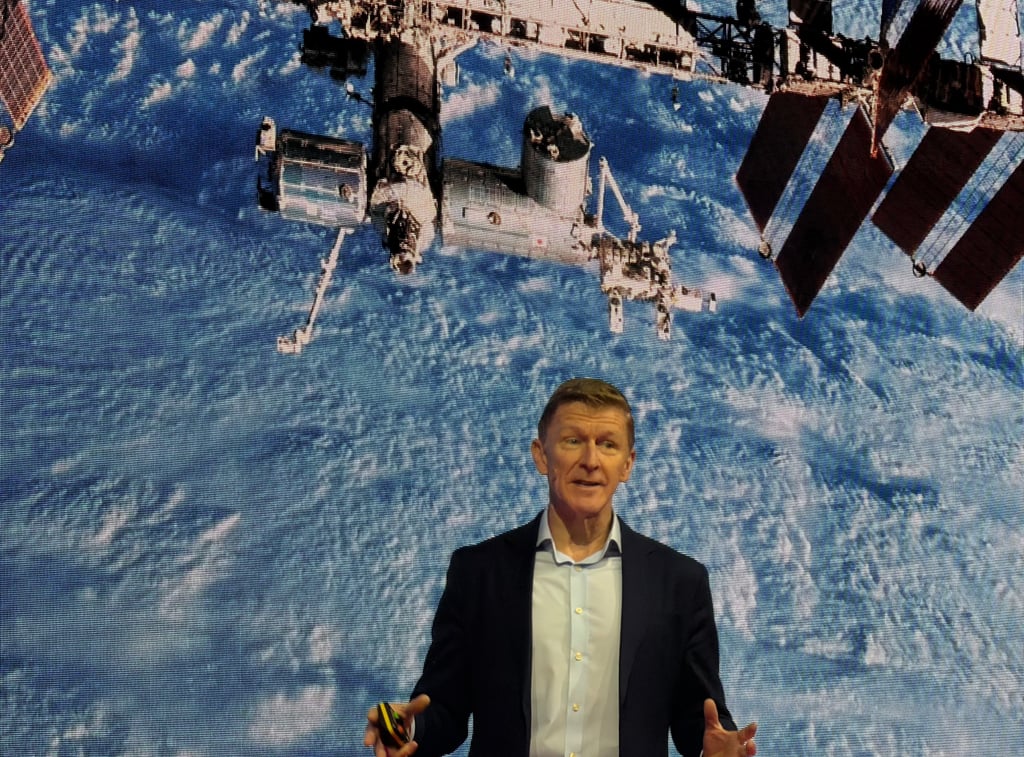
Three names headlined the keynote speeches of the summit, with British astronaut Tim Peake the main event of the opening hours for day one. With my interest in astronomy and many things space-related, I avidly followed Tim’s journey to the International Space Station (ISS) and very much enjoyed how he made an effort to interact with younger audiences whilst on board the ISS. Hence, fan-boying that Tim was attending, I was eagerly anticipating his presentation. Tim revealed the range of challenges he (and all astronauts in training) have to face and he flagged specific topics such as needing to take risks, avoiding having a ‘risk-adverse mentality’ as it’s simply no good in space— the whole experience of going to space being a series of incredibly massive risks. Plus the effort of the four years of astronaut training, including a significant section for medical skills awareness, observing surgeries, etc., as they may be required to perform operations on the ISS.
I was impressed with how incredibly skilful he (and other astronauts) are and was very admiring of his personal strength of mind and composure, plus his capabilities he’d developed and learned from his training. It was a worthy keynote to listen to.
British Astronaut Tim Peake at the Health.tech Global Summit 2026
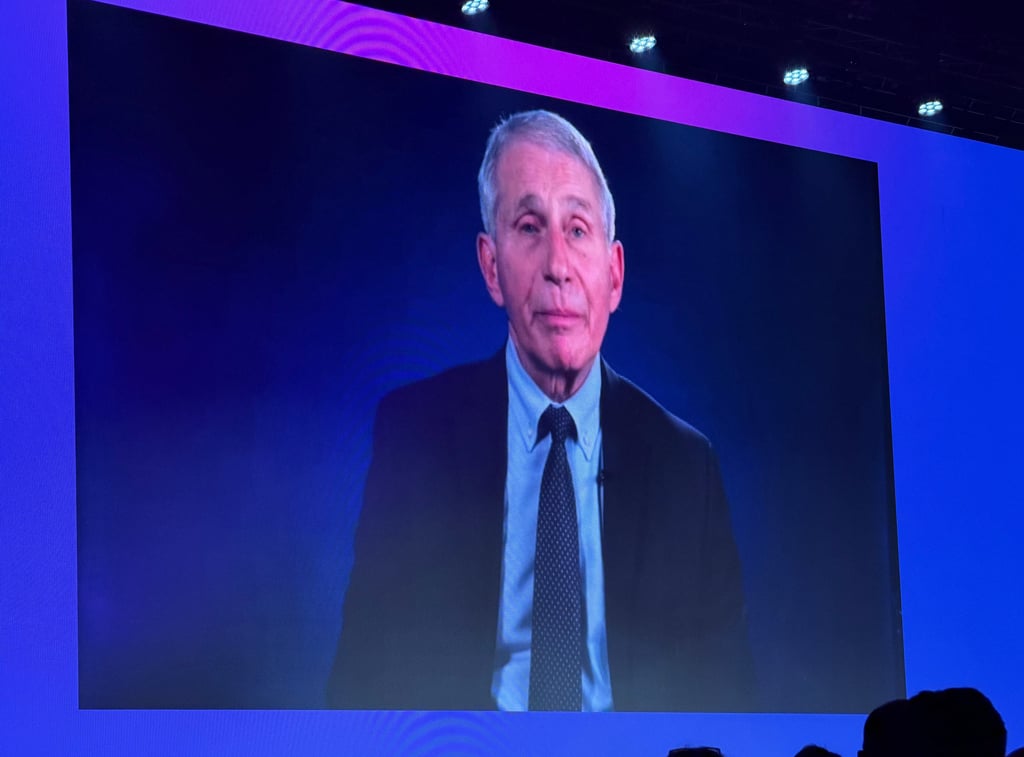
it is wrong to have “science by policy, instead of policy by science”
Dr Anthony Fauci, chief medical adviser to American presidents since Ronald Reagan and more recently, many would remember his high profile during the COVID-19 pandemic as adviser to President Trump, was the headline speaker for day one’s afternoon session. Sadly, unable to join in-person as was originally planned, he came with a prepared speech for a virtual presentation. I did wonder if the session had been pre-recorded until the host of the session began to interact with Dr Fauci. Plus, his speech seemed to resemble something he would have prepared for a Senate Committee Hearing, highlighting his long and successful career, but ending with some of his concerns for decisions in the current administration. Indeed, during his one hour of questions, Dr Fauci often returned to topics of concern, being quite controversial in his views that I would not have been surprised to find a subsequent news article conveying his comments.
Disinformation and misinformation… very often leads to the avoidable deaths, suffering of individuals
One specific comment that resonated was his concern with the current administration’s behaviours; the cutting of funds, anti-vaccine behaviours, and just a general dismissal of facts and science, and that young people are being disincentivised to taking careers in the scientific and medical fields. His point being that the administration’s behaviours, economic cutbacks, etc., don’t just impact the current state of affairs, but could well have a long-lasting impact for generations to come, if there is a lack of talent and investment. Specifically stating it is wrong to have, “science by policy, instead of policy by science”. He went on to say, “Disinformation and misinformation… very often leads to the avoidable deaths, suffering of individuals who, if they were exposed to the facts, the evidence, the data, and real information, they may not have had the unfortunate consequence of suffering that related to their health.”
His closing statement being, “Bottom line is, the divisiveness that we’re seeing in some countries (certainly my own county) … is really the enemy of good public health. We’ve got to pull together as individuals and nations.”
Dr Anthony Fauci virtually presenting at the Health.tech Global Summit 2026
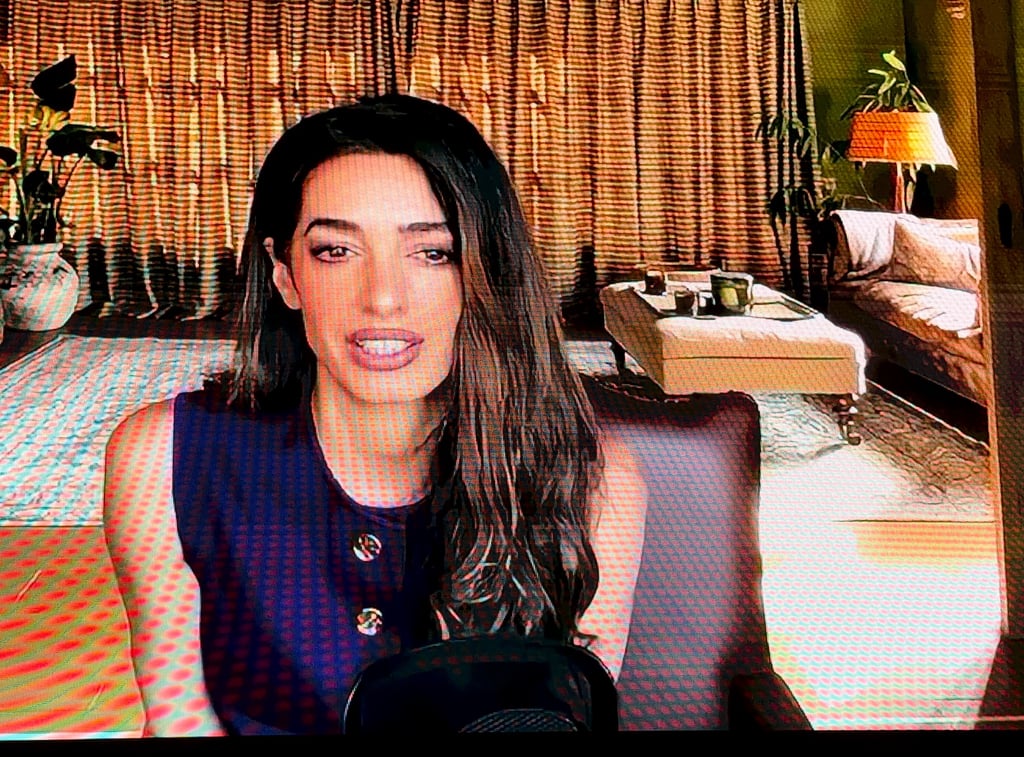
“There is a role each person can play, whether it’s who they elect as their leaders, how they’re raising the next generation, or the decisions that they make in their workplace”
To start day two, we had human rights advocate Amal Clooney, who was also unable to attend in person as she and her family were stuck in Dubai, and garnered the most laughs by noting her husband George had been the tech support to arrange the video call. Impressive with her speech and her passion for her activities, advocating support to women, to journalists being imprisoned, etc., she was very inspirational. Noting her topic being ‘Using AI for good in the justice sector’, and that she would have wanted to meet technical experts for joint learnings with experts in healthcare, it was often a challenge to understand her topic as part of the Health.tech summit.
However, I did appreciate her more general messages for being a voice to make change. For advice to finding our own voices, she quoted her husband George’s advice from his father, “if you do one thing in life, defend people with less power and challenge people with more power”. Her closing statement being particularly powerful; “There is a role each person can play, whether it’s who they elect as their leaders, how they’re raising the next generation, or the decisions that they make in their workplace. And as a parent, .....[when generally speaking] with children it’s even more clear that we want to have a good answer when they learn about this period of history and when they find out about things that were happening and ask us ‘What did you do? What did you do with the voice that you had?’ And would hope to have a good answer to that”.
—————
In keeping with the theme of three, in addition to the three keynotes that I was impressed with, I felt more inspired by presentations and panel discussions on advancing technologies. The three most significant being: AI (obviously), Quantum computing, plus also BCIs— Brain Computer Interface innovations.
For AI, which as I alluded to before was such a constant theme that it was overwhelming, I found the most interesting and inspiring presentation to be from Maximiliane Gläsle of Google Cloud promoting the AI Co-Scientist, a tool to help researchers assess the thousands of scientific literature— approximately 8,000 released per day, far too many for any one human to ever read and comprehend. However, the AI tool can read them all and they can filter through results, find trends and connections that humans would never likely find. One example being determining a medicinal formula for a type of cancer that was ultimately verified and proven effective. I liked the multi-bot tool— essentially six different ‘agents’ with different purposes, one being tasked to be completely cynical of the results the prior agent had determined. Being a little critical of AI, I liked that specific cynical agent (and if anyone wants to come and give it a name such as Pelybon or Pelybots, we can discuss). The 6 agents working together being very effective and I would be interested to see how this develops in the months and years ahead.
There were a couple of presentations regarding Quantum computing and the latest developments. Significantly, they were comparing the advancements and progress in AI to the state that Quantum computing is in. Notably, that AI has been in progress since the 1950s, yet only recently has there been an exponential increase in development occurring (in possibly the last 2-3 years). For Quantum computing, they believe that it is now at the state where AI was 2-3 years ago and hence that surge in development should begin. Personally, I would assume the combination of the two elements— AI and Quantum computing— will be where we can expect the massive increase in developments. I came away from the presentations wondering how long it would be before these developments could determine cures for cancer? We can only hope.
On day two on the main stage, I almost missed a series of presentations being flagged as “AI-free”. Primarily on the subject of BCIs— Brain-Computer Interfaces, though the first presentation was from the company Swiss Vascular (from ETH) with their impressive microrobots for drug delivery in specific targeted areas such as the brain. The core of the technology, using electromagnetic catheter guidance, I am well-versed with, having been able to get to know the great team at Nanoflex Robotics in Zurich, utilising the same core technology as developed by Zurich’s ETH.
Hence, knowing this technology, though still impressive, I was more surprised by the following two presentations showing the developments of brain interfaces, being flagged as the “next big thing” and both believing that there will be exponential development in the next 15 years. Having electrodes that can stimulate areas of the brain, for example, allowing stroke patients to have movement again where it hadn’t been possible, as presented by Dr Frank Desiere - PhD MBA of CorTec. Following Dr Desiere was Dr Dr. Clemens Fischer of Futrue Neurosciences showing technology with brain electrodes that could: read minds, enable robotic arm operation over great distances, and, he explained, numerous other potential opportunities. I casually glossed over “read-minds” in that last sentence, yet the significance of the technology is profound; having electrodes implanted in the brain in specific areas that could read signals and, with significant computing technology, determine the assessed “words” that were being thought. Noting that the presentation implied this was not AI-based technology, being a few years old, one can only wonder about the latest advancements whereby using Agentic AI could far easily translate the brain signals to words and sentences.
In an advancement of this technology, one of the presentations even described the future potential of this development as “mind control”, though it was seemingly meant in a medical, non-threatening application. As such, it’s clearly impressive technology and, with a view to advancement in healthcare and people’s well-being, I would be very keen to see how this progresses.
————
It wouldn’t be a Pelybon News newsletter if I didn’t have a digression talking about science fiction-based technologies and specifically the Transformers. Hence, we’ll take a side-step whilst discussing these technologies to reflect on a capability one of the Decepticons had back in 1986— meet Insecticon Bombshell and his ability to inject ‘cerebro-shells’ for mind control.
Amal Clooney virtually presenting at Health.tech Global Summit 2026


In the Marvel US story of July 1986, “Aerialbots over America!” (Getting to us in the UK only in November of ‘86— and people now complain about films and TV shows that don’t get released globally at the same time— spoilers!), Bombshell injects Hoover Dam engineer Ricky Vasquez and ultimately takes over his mind. As written by Bob Budiansky and with art by Don Perlin, Ian Akin, and Brian Garvey, the panels described the shell’s progress, telling of the shell making its way “...to the tangle of neurons and dendrites that comprises his brain, where in the area of the cerebellum that controls independent thought, it anchors itself...”
Insecticon Bombshell- a rhinoceros beetle
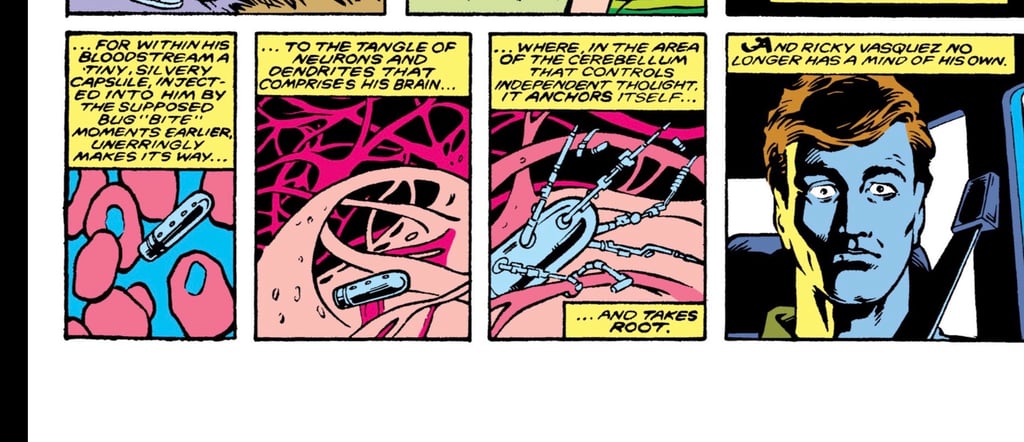
Watching the various computer animations and presentations of these developing technologies, I was immediately reminded of this scene and those panels.
The science fiction fan in me does get concerned to read presentations which literally say “mind control”. As noted above, the applications are for therapeutic benefit; however, a presentation from a Start-up conference in Basel last December advised Start-ups and entrepreneurs of an area to consider to receive funding— the potential military application of their healthcare technology. The presenter noted the marked increase in investments in military projects in recent years (such is the geopolitical state of our world).
Thus, remote mind-controlling of robots from the other side of the world would be partly impressive, yet partly disturbing. But it would be payback for robots mind-controlling humans, eh, Bombshell?
Note: to clarify, I’m not saying any of the above listed technologies would ever be utilised or manipulated in such a way. It’s to flag how theoretical technologies in science fiction stories now become reality in some form.
—————
it just needs to be the “right tech”
I was trying to keep to my theme of “three” and checking my notes I found a fourth technological topic that impressed, so to give a quick reference to that; Professor Dr Roger Gassert of ETH presented on assistive robotics such as lower-limb exoskeletons for paraplegics. Dr Gassert discussed some of the challenges faced; such as the limited translation from laboratory-developed technologies to the real world, limited adoption of such technologies (often due to limited reimbursements), but also the importance of user-centred design needed. He gave examples of how the young engineers have been learning elements from the volunteers involved in the development programmes who give insights on their conditions that the students would not have thought to consider. He noted that it’s not necessarily important to achieve a high-tech solution, that it just needs to be the “right tech” i.e. the right solution. From a usability POV it was a clear messaging of the importance of early-phase interactions with users in development, certainly something I agree with and one of my themes for the risk diagram I have been detailing (and will return to in future Newsletters).
I did reflect, however, on how critical I’ve been about the development of bipedal robotic forms, questioning what value there is to mimic the human form. These exoskeletons provide an answer to that criticism with the potential to provide supportive, assistive or even replacement limbs for patients with limited or zero function. In this application, bipedal forms do have merit.
Also, whilst I digress, and returning to the theme of AI, I must make note of a very moving presentation from entrepreneur Lexi Mills, “Rethinking What Counts— Transforming Women’s Care Through Meaningful Data”. Lexi recounted her personal journey from falling sick at the time of the COVID pandemic, the limited support she received, a near-death experience, then ultimately making her own efforts using her entrepreneurial skills to analyse data for her own determinations of what was happening. Her conclusion being that there is a vast gulf between the amount of data regarding women’s health versus men’s (portrayed as Jupiter versus Mercury in an image). Noting Lexi’s comments that from her experiences there are biases in doctors and nurses’ judgements and decisions, for Software as Medical Devices (SaMDs) based on or utilising AI, this observation in the gulf in data exposes the risk of Gender Bias in SaMD AI results. This has to be an area of focus and credit to Lexi for being open with her personal story to bring attention to it. I found it quite a moment (and again I’ll likely come back to this AI risk element, discussing the risk-diagram in future Newsletters)
——————
Overall, the Health.tech Global Summit was an extremely large, well-managed, and well-attended event with over 5,000 attendees on the first two days. The advancements in technology were the most thought-provoking elements for me, both from the point of view of the impressive opportunities, but also with a slight concern about the pace of developments and potential other sides to those developments. As I start to learn about myself and potential neurodiversity elements, attending events such as these is extremely challenging for me to network. The sheer volume of people and the very loud noise of the venue made it difficult. I was happy to make some re-acquaintances, plus new acquaintances (probably not nearly enough) and especially the delightful group I met by the wine fountain at the end of the first day! Yet the latent science fiction fan is always impressed to discover and learn advancements in technologies and, for me, that was the main result of attending. To be impressed with, yet somewhat concerned about, where the technologies are heading.
For the keynote speeches, upon reflection - as impressive as the high-profile names were for the keynote speeches, none of the speeches left me with any thought-provoking ideas applicable to health tech. I felt there was a disconnect between the content and the more general themes of the summit. If I had the chance to advise the organisers, I would suggest that for next year’s event, they could utilise a speaker with awareness of science fiction and could present on how our current developments appear to be “no longer science fiction”. (Waves hand 👋).
(Apple’s AI Proofread tool has been used to check this article - though I didn’t agree with all the changes).
Panels from Marvel US’s “The Transformers” #21 (Marvel UK #90) written by Bob Budiansky, art by Don Perlin, Ian Akin and Brian Garvey